Melbourne RoboCats Mentorship
I mentored Melbourne RoboCats, an all-girls high-school team, on the software and electrical side of their FIRST Robotics Competition (FRC) robot. Most of the season went into getting the students comfortable with embedded programming on the NI RoboRIO using WPILib (C++), and helping them think about the robot as a control system rather than just a pile of code.
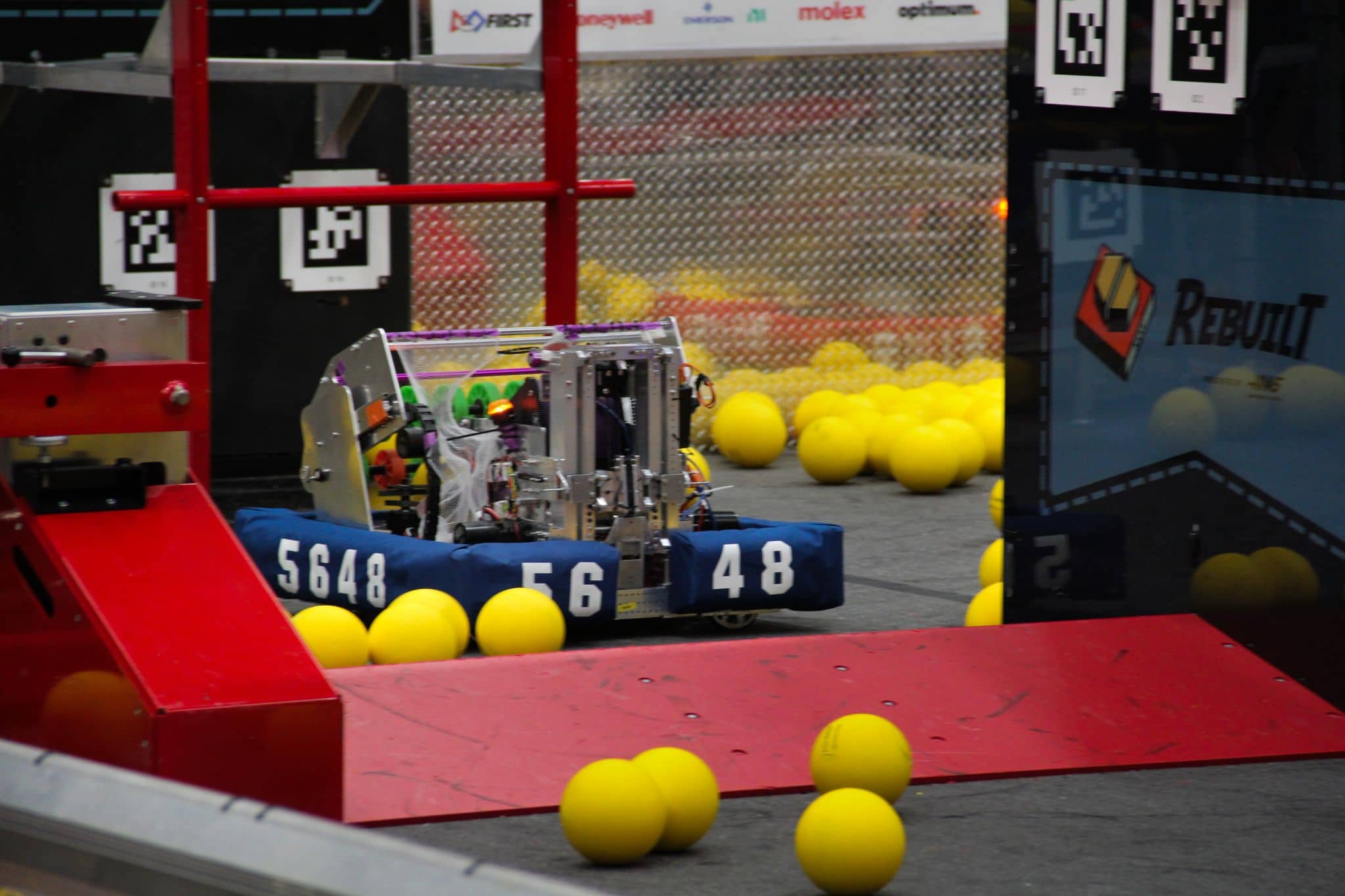
Photo by Kevin Chen
We started with the basics: how the RoboRIO, power distribution hub, motor controllers, and sensors all fit together as one system. From there we laid out a code structure that kept autonomous logic, driver control, the individual subsystems (drive, intake, shooter, climber), and shared helpers separate. The students got used to breaking the game down into features and turning those into reusable bits of code.
On the embedded side, I walked them through motor control with WPILib, including setting up CAN motor controllers, current limits, and neutral modes. We wired in encoders, gyroscopes, and limit switches so the robot could run closed-loop control and not drive its mechanisms past their limits. The students wrote the drive code, mechanism control, and the safety checks that kept everything within the rules and easy on the hardware.
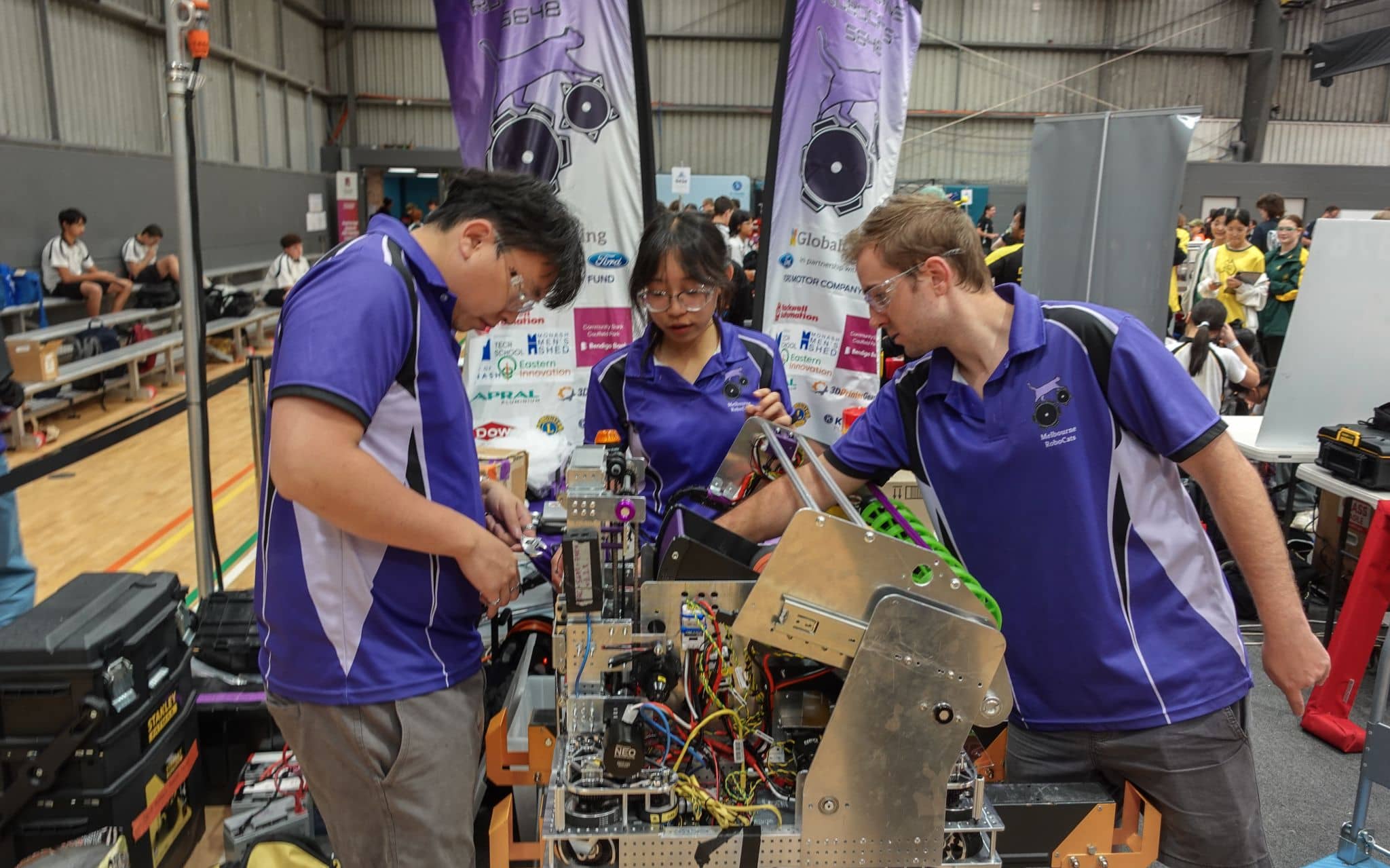
Photo by Kevin Chen
Autonomous was the part everyone was most nervous about. We mapped the field out into coordinates and paths, then turned those into command sequences that mixed sensor feedback with timed moves. Dashboards and telemetry let us watch the sensor data live, track down problems, and tune things like PID gains, motion profiles, and timing.
Electrical work got just as much attention. We went through wire gauge, fuses and breakers, grounding, and keeping the CAN and sensor lines clean. The students learned to lay out tidy wiring, label everything, and actually work through problems like brownouts, dropped CAN packets, and noisy sensors instead of guessing at them.
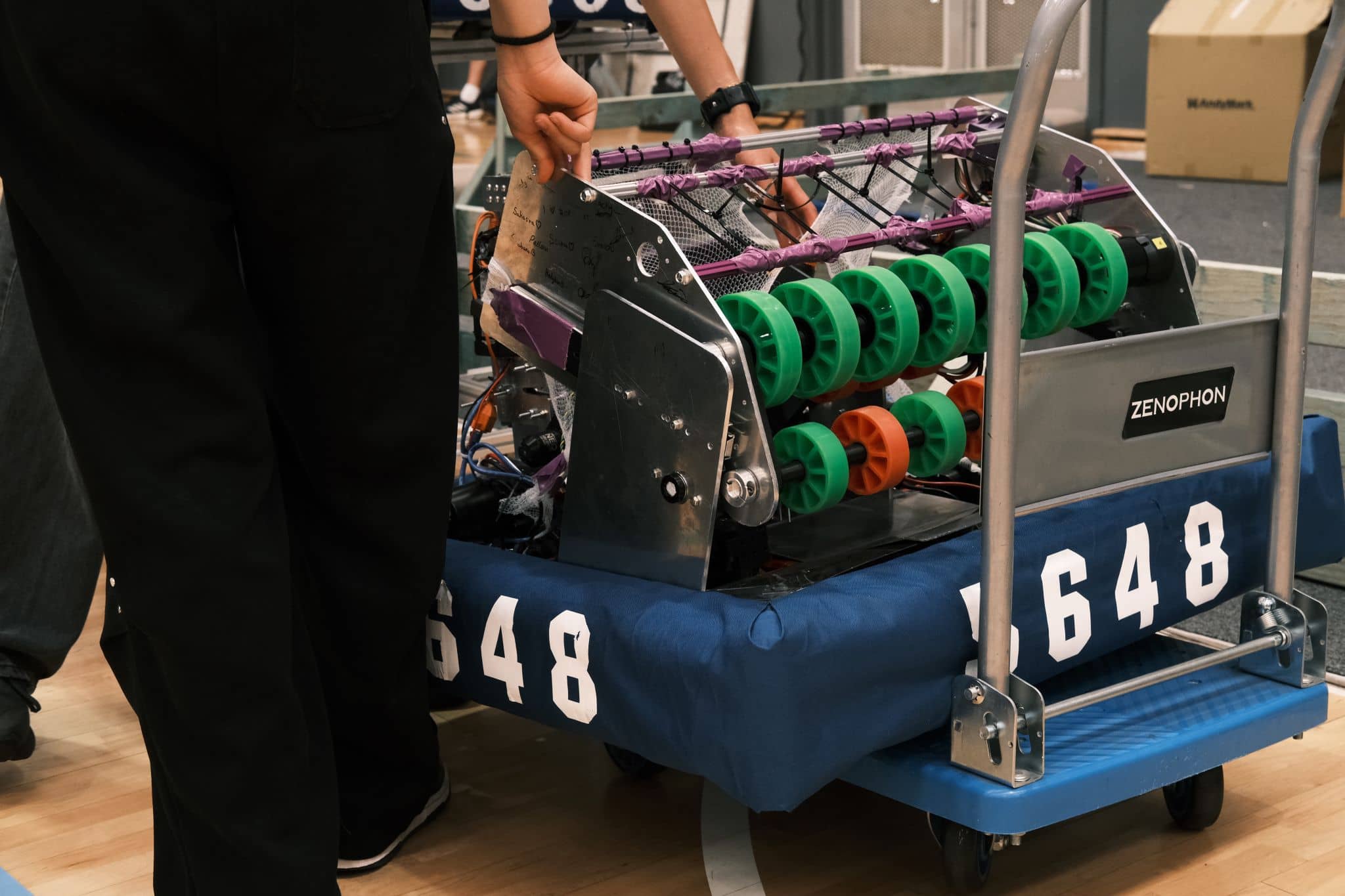
Photo by Kevin Chen
The whole season ran on small loops: write a bit of code, test it on the robot, watch what it actually did, then fix it. That kept the robot drivable and forgiving for the drivers once competition pressure kicked in. The students also had to explain their control strategy and electrical choices to judges, which forced them to really understand their own work.
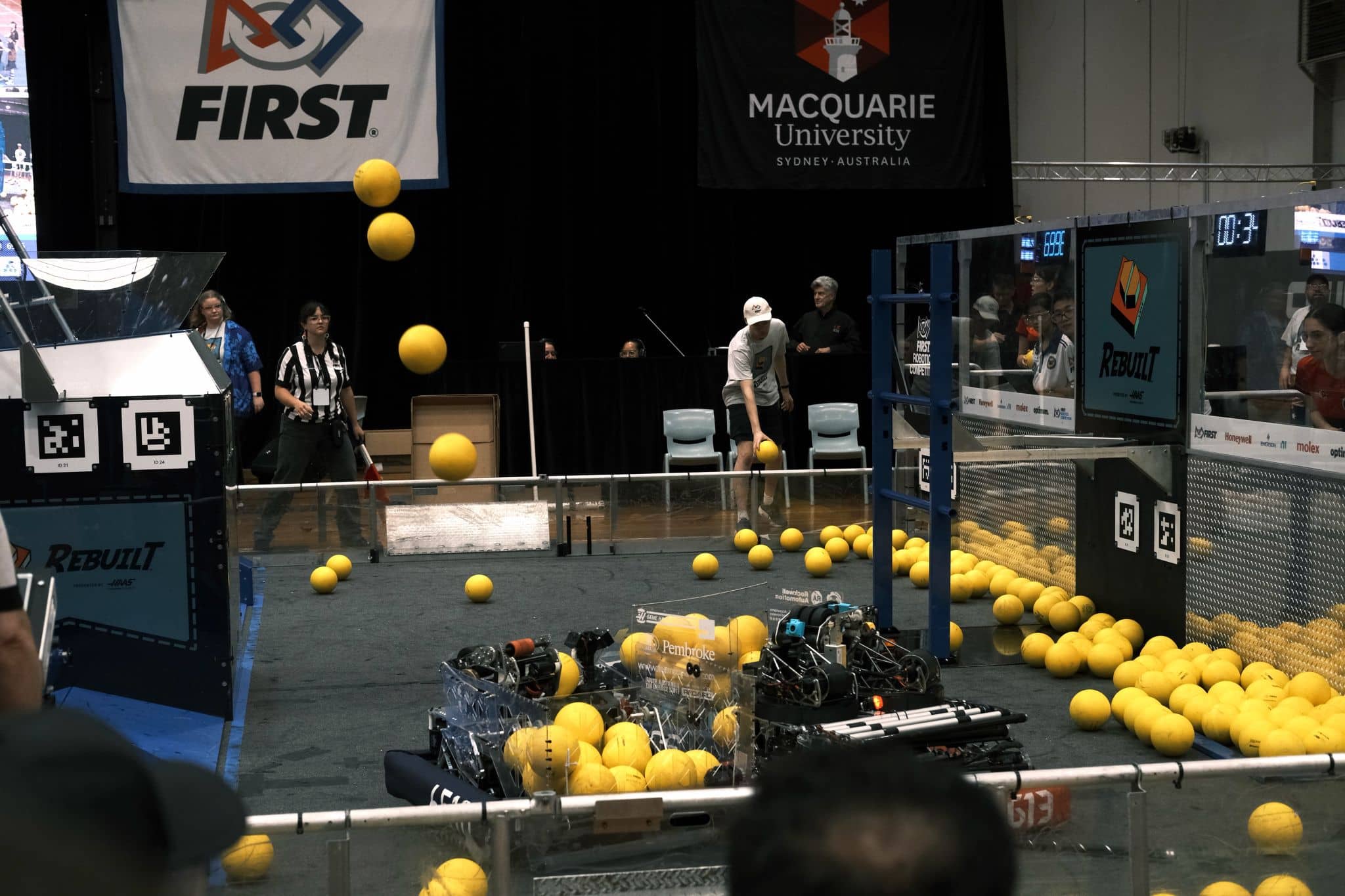
Photo by Kevin Chen
The season wasn't all in the workshop either. We made it to the Melbourne Formula 1 Grand Prix, which was a nice way to connect the precision and teamwork we were practising on the robot to engineering at the very top end of the sport.
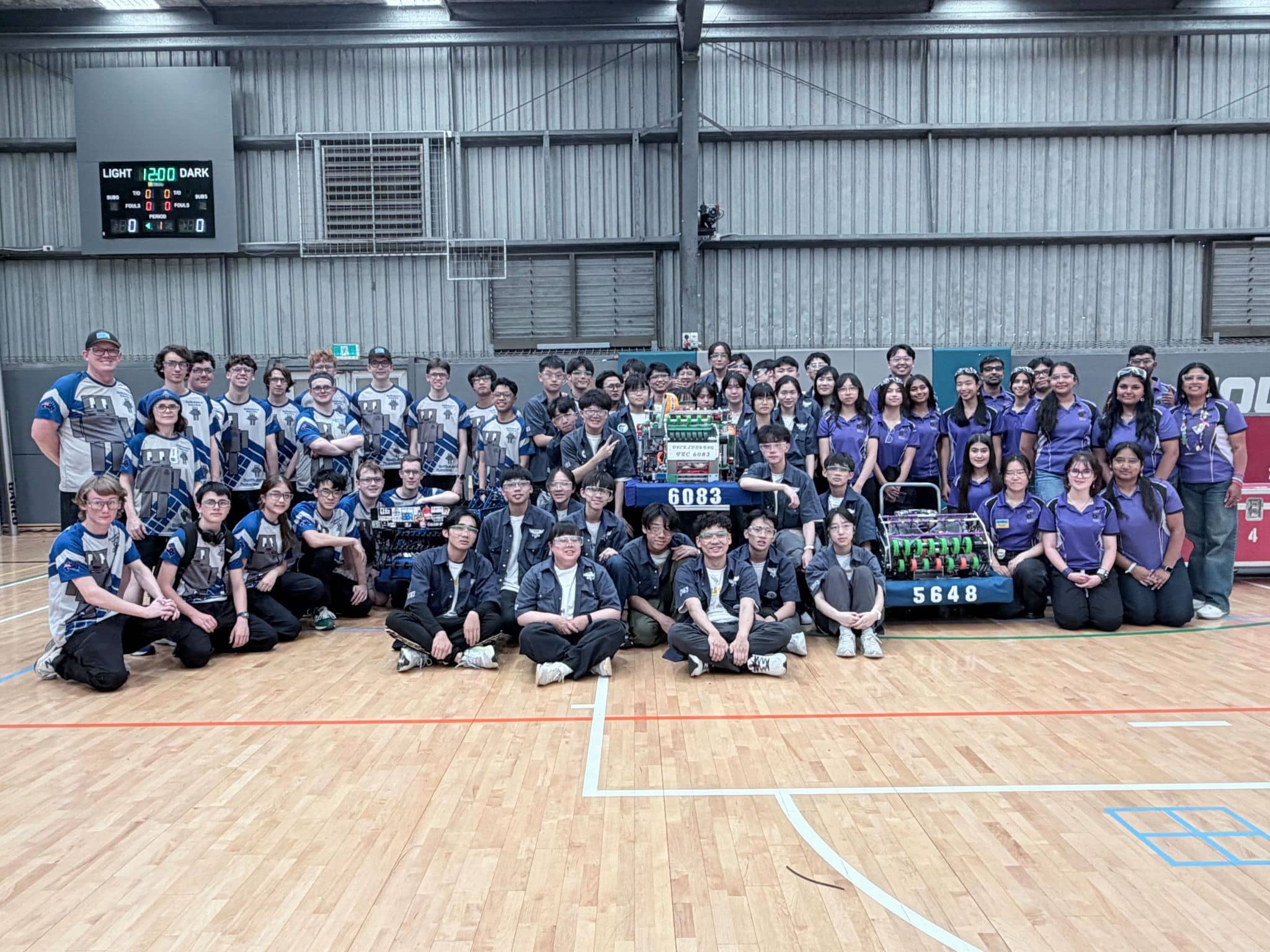
Photo by Kevin Chen
By the end, the RoboCats were adding to the codebase on their own, safely changing the electrical system, and using telemetry to debug and improve the robot without me hovering over them. They walked away with a competitive FRC robot and some real experience in embedded systems, control, and working as a team against a deadline.
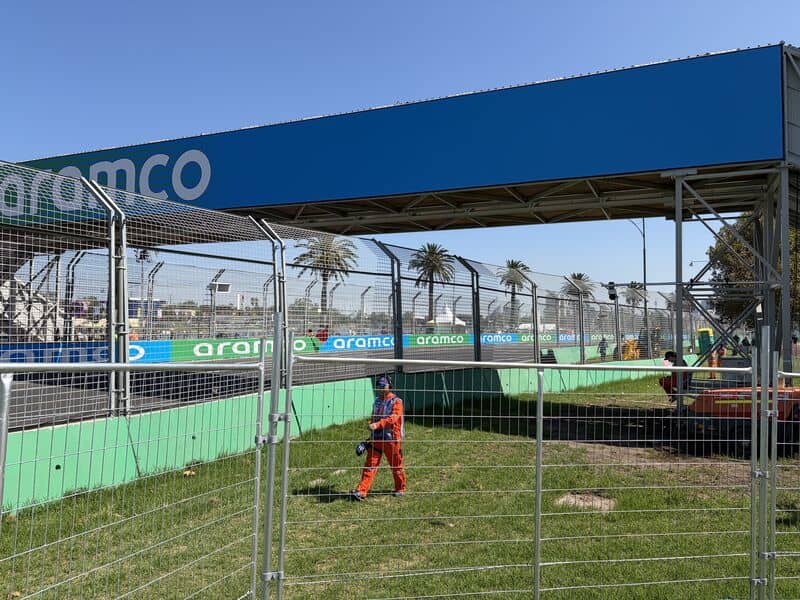
Photo by Kevin Chen
Key Achievements
- •Mentored an all-girls high-school FRC team (Melbourne RoboCats) in embedded software and electrical systems
- •Developed a structured control-system architecture on NI RoboRIO using WPILib (C++)
- •Implemented real-time motor control using CAN-based motor controllers with encoder and gyro feedback
- •Integrated sensors (encoders, gyroscopes, limit switches) for autonomous and tele-operated control
- •Guided safe electrical system design including power distribution, breakers, wiring layout, and signal integrity
- •Taught students to use telemetry and dashboards for debugging, tuning, and performance analysis
- •Attended the Melbourne Formula 1 Grand Prix as part of the broader mentorship experience
- •Enabled students to independently extend the robot codebase and confidently modify electrical systems