Tube Furnace for Silicon Oxidation Testing
This was a garage project I took on just to see if I could build a working tube furnace from scratch and use it to study silicon oxidation by watching the colour of the oxide layer change. The furnace is a quartz glass tube wrapped in 22AWG nichrome heating wire, held in place with high-temperature ceramic cement and wrapped in ceramic fibre blanket for insulation. A variac (variable autotransformer) controls the power so I can ramp the temperature smoothly, and a high-temperature thermocouple keeps an eye on the process. I run it at roughly 25 degrees per minute so nothing gets thermally shocked and the oxidation stays even. Feeding steam in at one end speeds the oxidation up, which lets me see how temperature and time change the rate and quality of the silicon dioxide that forms. The oxide layers come out in different colours depending on their thickness, so I get a quick visual read on how the oxidation is going across the wafer.
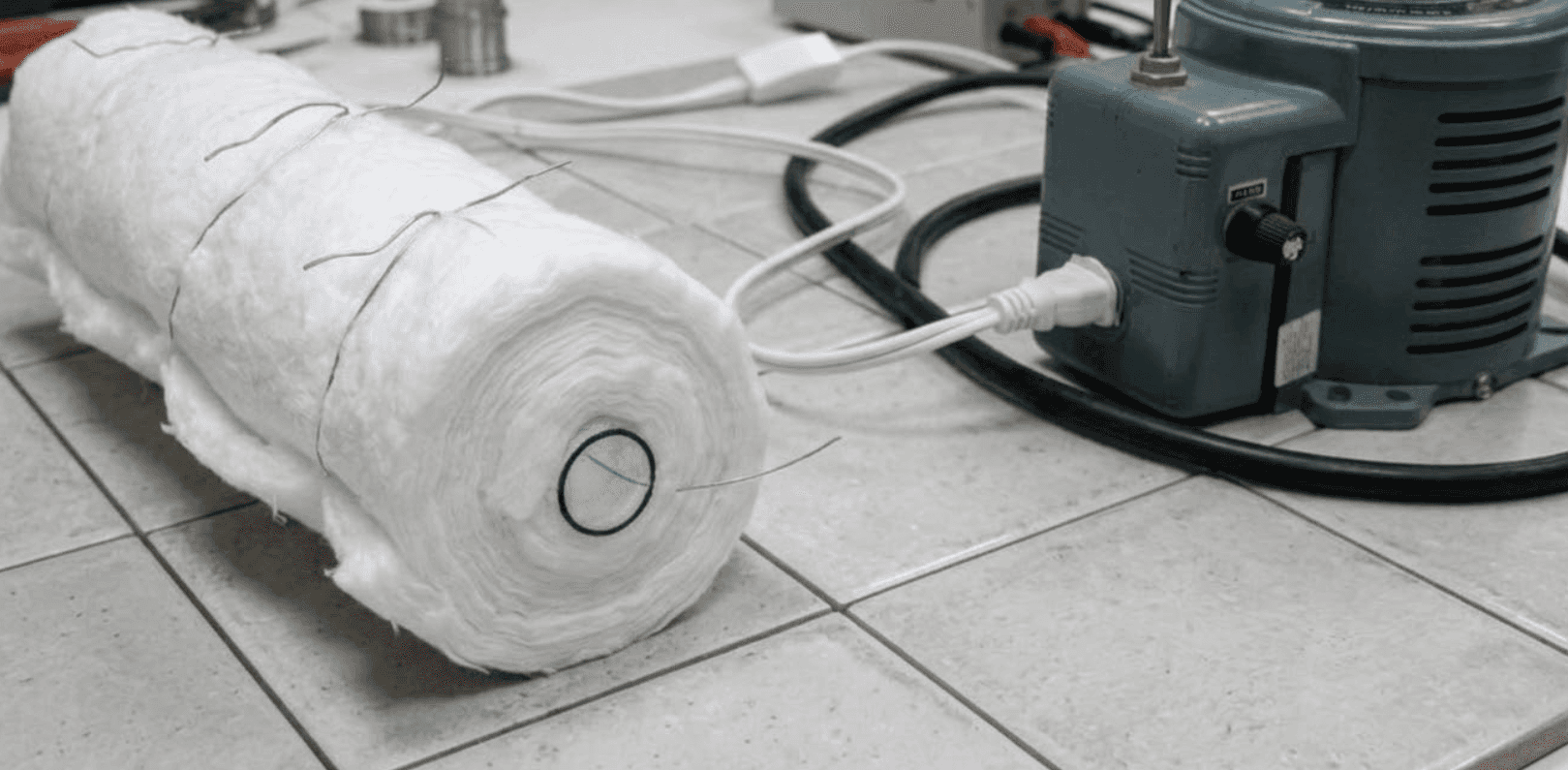
Photo by Kevin Chen
I started by picking materials that could actually survive the temperatures silicon oxidation needs (usually 800-1200°C). The quartz tube does double duty as the reaction chamber and a window to watch what's happening inside. I went with quartz because it handles heat well, barely expands, and holds its shape at high temperatures.
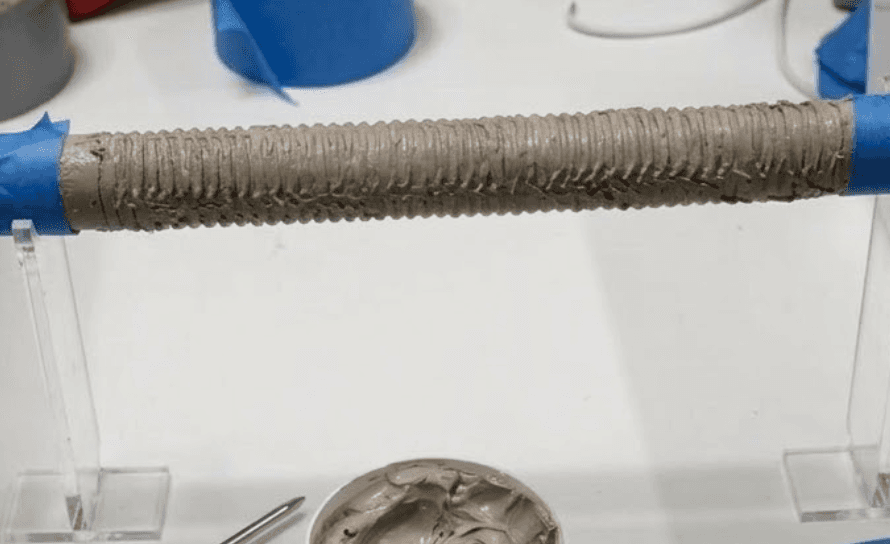
Photo by Kevin Chen
I wound the 22AWG nichrome wire around the tube in an even helix so the heat would spread evenly, then locked it down with high-temperature ceramic cement, which also keeps the turns electrically separated. The cement holds up past 1000°C and stops the wire shifting as things heat up and cool down. After that I wrapped about a metre of ceramic fibre insulation around the whole assembly. That keeps the heat in, protects me from burns, and holds a steady temperature along the tube. It also stops the tube cooling so fast that it cracks. Temperature control is the part that really makes or breaks the process. The variac lets me adjust the voltage smoothly for a controlled ramp, and I keep it at around 25 degrees per minute so neither the wafers nor the quartz tube crack from thermal shock. A K-type thermocouple sitting inside the tube gives me live temperature feedback the whole way through.
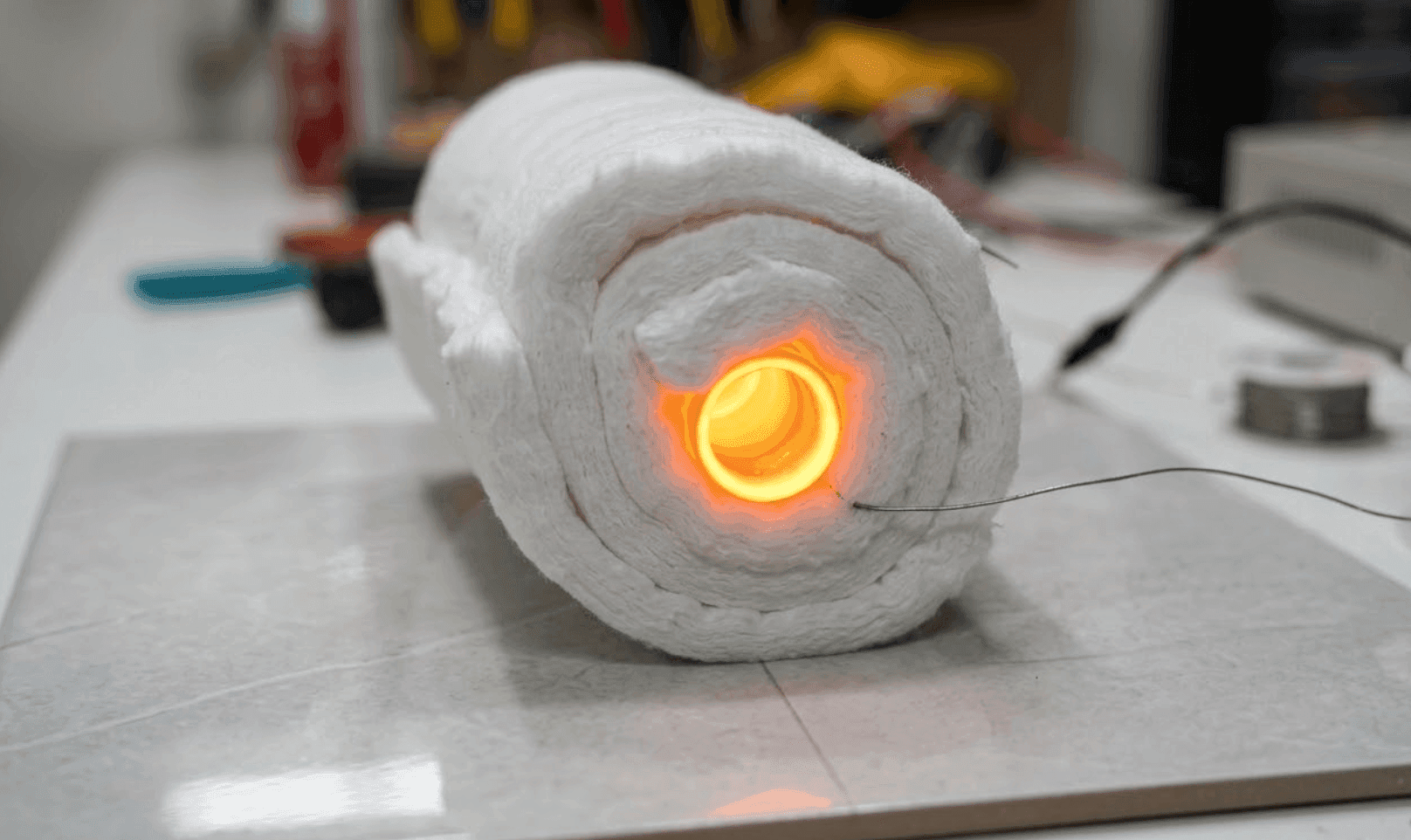
Photo by Kevin Chen
To push the oxidation along, I introduce steam at one end of the tube. The water vapour speeds silicon oxidation up a lot compared to dry oxygen on its own. By changing the temperature and how long I leave it, I can watch how each one affects the oxidation rate. The silicon dioxide layers end up with their own colours depending on thickness, thanks to thin-film interference. Thin layers look yellow or gold, and as they get thicker they move through blue and purple before going more or less transparent or white.
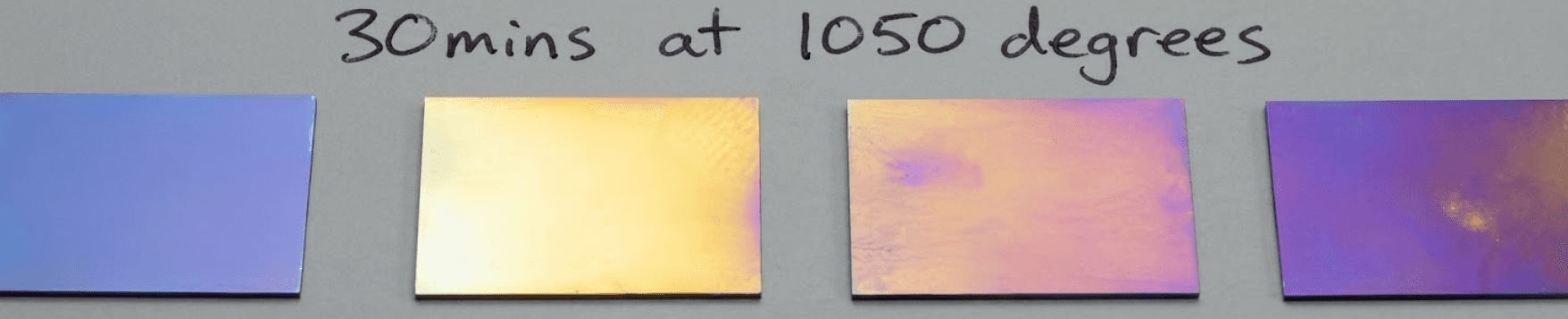
Photo by Kevin Chen
That gives me instant feedback on how the oxidation is going without having to destroy the sample to measure it. By matching the colours I see against known oxide thicknesses, I can estimate the growth rate under different conditions. It ended up being a genuinely useful little research tool, and it pulled together materials science, thermal engineering, and a bit of semiconductor processing into one build.
Key Achievements
- •Designed and constructed a custom tube furnace capable of reaching 1200°C using quartz glass tube, nichrome wire heating elements, and ceramic insulation
- •Implemented precise temperature control using a variac power supply and high-temperature thermocouple for monitoring
- •Developed controlled heating protocol with 25°C/min ramp rate to prevent thermal shock
- •Integrated steam injection system to enhance silicon oxidation rates
- •Successfully observed and correlated silicon dioxide layer colors with oxidation conditions (temperature and time)
- •Demonstrated understanding of thin-film interference effects and oxidation kinetics